In under a year, two different brands of powdered baby formula have been pulled from shelves in the United States after infants were hospitalized with botulism. For a parent, formula is supposed to be the one thing you never have to question. You measure the scoops, you warm the bottle, and you trust that what is inside is safe. Botulism in baby formula was, until recently, almost unheard of. Two outbreaks in a row have shaken that trust.
The most unsettling part is that the danger was not new. Federal regulators had named this exact hazard in powdered formula years before either outbreak, and the country still saw two formula-linked infant botulism outbreaks in under a year.
Two formula botulism outbreaks in under a year
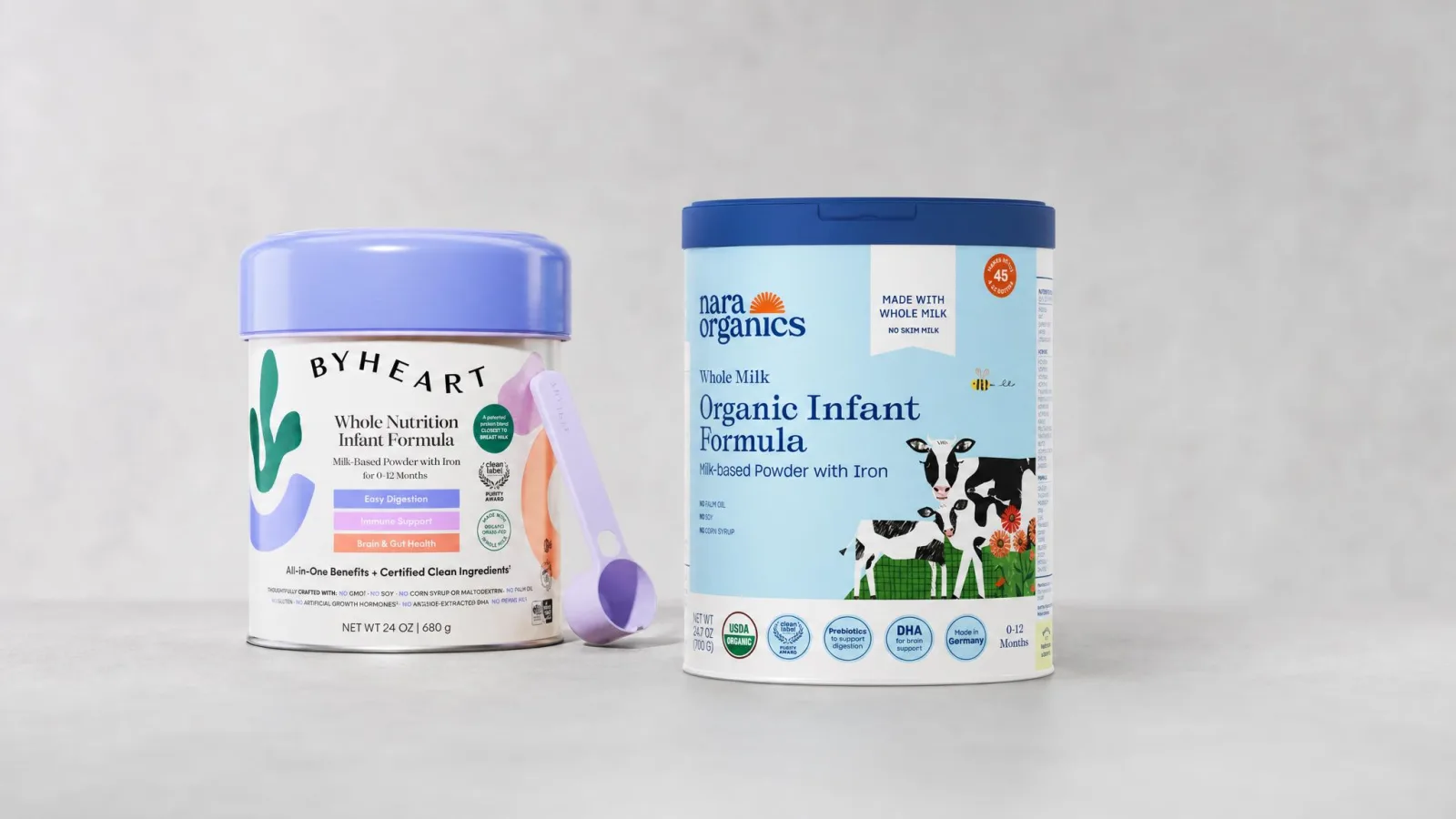
The first outbreak involved ByHeart Whole Nutrition Infant Formula. Between late 2025 and early 2026, the FDA and CDC, working with the California Department of Public Health, investigated infant botulism in 48 babies (28 laboratory-confirmed and 20 probable) across 17 states. Every one of them was hospitalized. There were no deaths. The CDC declared the outbreak over on February 26, 2026. This was the first time infant botulism in the United States had ever been traced to powdered formula, and FDA whole genome sequencing matched the bacteria in a positive formula sample to a single lot of an organic whole milk powder ingredient. You can read the full timeline on our ByHeart infant formula botulism outbreak page.
The second involves Nara Organics. On June 13, 2026, Nara recalled all lots of its Whole Milk Organic Powdered Infant Formula after three infants in California, Pennsylvania, and Washington were hospitalized with infant botulism. Here the picture is different, and the difference matters. As of the recall announcement, the Nara formula had not tested positive for Clostridium botulinum. The recall was issued as a precaution because all three babies had consumed the same brand, and the investigation is still open. State labs are testing leftover formula, and the findings may change. The CDC has also noted that Nara makes up less than 1 percent of the infant formula available in the United States. Our Nara Organics infant formula botulism outbreak page tracks the recall details and the lot codes.
Two clusters this close together, both involving the same botulinum toxin type (Type A) and both surfaced by the same state program that treats infant botulism, is what has put this issue in front of parents, pediatricians, and federal regulators all at once.
Why botulism is so dangerous for a baby
Botulism in an infant is not the same illness adults get from a bad can of food, and the difference is the whole reason babies are at risk.
An adult usually gets botulism from swallowing toxin that has already formed in improperly preserved food. A healthy adult gut, with its mature mix of bacteria and stomach acid, can keep Clostridium botulinum spores from taking hold. A baby's gut cannot. When an infant under 12 months swallows the spores, they can settle in the intestine, grow, and produce the toxin inside the baby's own body. That is why this specific illness, infant botulism, affects babies and not their parents, and it is why the CDC treats it as a medical emergency. Botulinum toxin is one of the most potent toxins known to science.
The early signs are quiet and easy to miss. Constipation is often first. Then comes weak or poor feeding, a cry that sounds weaker or different, drooping eyelids, and a loss of head control that parents often describe as the baby going floppy. From there the weakness moves down the body and can reach the muscles a baby needs to breathe. Symptoms can appear anywhere from a few days to about a month after exposure, which is part of what makes it so frightening. A baby can keep drinking a recalled formula long before anyone connects the dots.
The treatment exists, and it works, but it is not gentle on a family. Babies receive an antitoxin called BabyBIG, developed by the California Department of Public Health Infant Botulism Treatment and Prevention Program. In the program's published clinical trial, BabyBIG cut the average hospital stay from about 5.7 weeks to 2.6 weeks. Even with prompt care, that is weeks in a hospital for a newborn, often including time in intensive care and on a feeding tube. With treatment, fewer than 1 in 100 infants die. In both the ByHeart and Nara situations, every hospitalized baby received BabyBIG and survived.
To put the scale in context, the CDC normally sees only about 150 to 180 individual infant botulism cases in the entire country in a year, almost all of them unrelated to one another. A single product sickening dozens of babies at once is not normal. It is what made the ByHeart outbreak historic.
Most infant botulism has nothing to do with formula. The best known risk is honey, which is why pediatricians warn never to give honey to a baby under 12 months. The rest of the time, the spores come from the ordinary environment, in soil and household dust. What made these outbreaks different is that the spores arrived in the one food a baby may take at nearly every feeding.
How does botulism get into powdered formula?
This is the question that unsettles parents the most, and the honest answer starts with a fact most people do not know. Powdered infant formula is not a sterile product. Unlike ready to feed liquid formula, the powder is not sterilized inside its final sealed can.
Clostridium botulinum spores are common in the environment. As the FDA explains, they are "naturally found in the environment including in soil and sediments (dust)" and can enter a plant "from hands, shoes, and other contaminated surfaces." The hard part is that these spores are built to survive. Bacteria like Salmonella and Cronobacter are dangerous, but they are killed by pasteurization. Clostridium botulinum forms a protective spore that, in the FDA's words, can "survive typical pasteurization and harsh environmental conditions for long periods." A heat step that wipes out other germs can leave these spores intact.
That single fact reshapes how formula safety has to work. If you cannot rely on a final heat step to guarantee a spore free product, then the real protection has to come earlier, in the ingredients and the suppliers behind them. The ByHeart outbreak showed exactly why. FDA investigators did not trace the contamination to a dirty production line at the end. They traced it, through genetic sequencing, back to a single lot of organic whole milk powder, an ingredient supplied by Organic West Milk and processed at a Dairy Farmers of America plant. The danger rode in with a raw material.
There is also a limit to testing the finished product that parents deserve to understand. Because spores can be sparse and unevenly scattered through a huge batch of powder, a clean test result does not prove a batch is safe. During the ByHeart investigation, the company found the bacteria in only 6 of 36 finished product samples, and most of the FDA's own finished product samples first came back negative even though the formula was later confirmed to be the source. The FDA notes that this specialized testing "can take two or more weeks" and is available at only a limited number of labs.
What was known, and when
It would be easy to treat these outbreaks as freak accidents. The public record makes that harder to believe.
The hazard was named, in writing, by the federal government years before either outbreak. On March 8, 2023, the FDA sent a letter to the powdered infant formula industry, addressed to "Manufacturers, Packers, Distributors, Exporters, Importers, and Retailers." It told the industry that "historical associations between powdered infant formula and pathogens such as Cronobacter spp., Salmonella, and Clostridium botulinum should be considered when designing and implementing controls." It named the exact organism, and it told companies to weigh that hazard when they designed their safety controls. The letter stopped short of asking companies to report botulinum the way it asked them to report Cronobacter and Salmonella positives, but for a manufacturer the message was the same. The hazard was known, and it was theirs to design around.
The dairy powder risk was on the global industry's radar even earlier. In 2013, a New Zealand supplier, Fonterra, set off international recalls of products including infant formula after tests suggested its whey protein concentrate might carry Clostridium botulinum. That one turned out to be a false alarm. New Zealand's Ministry for Primary Industries later determined the bacteria were a harmless relative, Clostridium sporogenes, which does not make the toxin. No babies were hurt. But the episode put the entire dairy powder supply chain on notice a full decade before ByHeart that this was a hazard worth controlling.
There is also a gap between what sounds reassuring and what actually protects a baby. A company can describe itself as "FDA registered" and advertise a large number of tests per batch, and a parent can reasonably read that as proof of safety. It is not the same thing. The FDA is direct about this in its own consumer guidance: "the FDA does not approve infant formulas before they can be marketed," and registering a facility is not an FDA endorsement. Paired with the testing limits above, the lesson is uncomfortable. A high volume of finished product tests does not guarantee protection from a hazard that hides in sparse spores in an ingredient.
Where formula or its ingredients come from another country, federal law already places a duty on the U.S. importer. Under the Foreign Supplier Verification Program, an importer must verify that its foreign suppliers are controlling hazards to the same standard U.S. law requires. The rule exists precisely so that a hazard cannot slip in from overseas without anyone here being responsible for checking. (Nara's formula was made in Europe. To be clear, that duty is the law that applies, and naming it is not a finding that any company failed to meet it.)
"None of this was unforeseeable," says Ron Simon of Ron Simon & Associates. "The science was known, the regulators had named the hazard, and the safeguards that catch it live upstream in the supply chain. When a product made for newborns carries this kind of risk, the accountability has to start with the people who chose the ingredients and verified the suppliers, not with the parents reading a label."
When the recall didn't reach the shelves
Even a fast recall only protects babies if the product actually comes off the shelf. During the ByHeart recall, it did not, at least not everywhere.
After ByHeart pulled its formula, the FDA and its state and local partners checked retail stores across the country more than 4,000 times. They kept finding recalled formula for sale. In the FDA's own words, recalled product was still on shelves "for over three weeks in one case, in over 175 locations across 36 states." On December 15, 2025, the agency announced it had sent warning letters to several major retailers, the kind of stores most parents shop at, for failing to remove the recalled formula. FDA Commissioner Marty Makary put it bluntly: "Food safety is a shared responsibility, and it is of utmost importance that all parties in the supply chain act swiftly and vigilantly to protect our nation's children from unsafe food." This was not a one off. The year before, the FDA had to send a similar warning to a retailer over recalled lead contaminated fruit pouches.
For a parent, the takeaway is hard but important. A recall in the news does not guarantee the can in your cabinet, or the one still on a store shelf, is gone.
What needs to change, and what is already moving
The encouraging part is that some of this is already in motion, and the public record gives a clear picture of where the fixes need to go.
The FDA has said it is now running surveillance sampling to better understand how often Clostridium botulinum shows up in powdered milk, the kind of ingredient at the center of the ByHeart outbreak. It has asked the international scientific bodies that advise food regulators, the Joint FAO/WHO group known as JEMRA and the Codex Committee on Food Hygiene, to assess spore forming bacteria, including botulinum, in infant formula and to recommend stronger controls across the whole production chain. Under a broader infant formula safety push the FDA calls Operation Stork Speed, the agency has also said it is increasing testing of formula and its ingredients for spore forming contaminants.
Tony Coveny, an attorney at Ron Simon & Associates who has handled foodborne illness cases for more than 15 years, argues the through line is simple. The protection has to move upstream, to mandatory and botulinum-aware controls on ingredients and suppliers, because that is where this hazard actually enters. And recalls have to reach the shelf faster and more completely when the people at risk are infants. As Coveny frames it, the ask is not for the impossible. It is for the companies that sell formula to the country's most vulnerable consumers to carry the cost of catching a known hazard before a baby does.
What parents can do right now
If you have a baby on formula, a few concrete steps protect them while the system catches up.
- Check for recalls before you buy or feed. The FDA and CDC keep current recall and outbreak pages. If your brand is recalled, stop using it regardless of the lot code unless the notice says otherwise.
- Do not try to stretch or replace formula on your own. The FDA warns against watering down formula or making homemade formula, both of which can seriously harm a baby. Ask your pediatrician about a safe alternative.
- Watch your baby for about a month after the last feeding. Infant botulism symptoms can take weeks to appear. Look out for constipation, weak feeding, a weak cry, drooping eyelids, and loss of head control.
- If you see symptoms, get care immediately and tell the doctor your baby had the formula in question. Treatment often begins before lab results come back.
- Save the can, the lot code, and your receipts, and report the illness to the FDA and CDC. That reporting is part of how the next outbreak gets caught sooner.
If your family was affected
Families whose baby was hospitalized after a recalled formula are often left with medical bills, lost work, and a lot of unanswered questions. Talking with a food safety lawyer can help you understand your options, and it does not commit you to anything. In the Nara situation, Ron Simon & Associates, with co-counsel, has already filed the first lawsuit on behalf of a hospitalized infant. Those filings reflect the firm's allegations, and the Nara investigation remains open.
Frequently asked questions
Can you get botulism from baby formula?
Yes, it is possible, though it is rare. In the 2025 ByHeart outbreak, the FDA confirmed Clostridium botulinum in the formula and traced it to a milk powder ingredient. In the 2026 Nara Organics situation, three infants got sick and the formula was recalled as a precaution, but as of the recall the product had not tested positive and the investigation was still open. Powdered formula is not sterile, and the spores behind infant botulism can survive normal processing.
How does botulism get into powdered baby formula?
Through the ingredients, more than the final factory step. Clostridium botulinum spores live in soil and dust and can ride in on a raw material like milk powder. Because the spores survive pasteurization and spray drying, a heat step does not reliably remove them, so the real control point is the safety of the ingredients and suppliers. In the ByHeart outbreak, genetic testing tied the contamination to a single lot of organic whole milk powder.
Is powdered infant formula safe to use?
For the vast majority of babies, yes, and for many families formula is the right or only choice. The key facts to know are that powdered formula is not sterile, that recalls do happen, and that you should check current FDA and CDC recall notices for your brand. If a formula is recalled, stop using it and ask your pediatrician about a safe alternative.
What are the first signs of botulism in a baby?
Constipation is often the first sign, followed by weak or poor feeding, a weak or altered cry, drooping eyelids, decreased facial expression, and loss of head control or general floppiness. The weakness can progress to trouble breathing. If you notice these signs, seek emergency care right away.
How long after drinking contaminated formula do symptoms appear?
Anywhere from a few days to about 30 days. That long and unpredictable window is one reason the CDC tells families to watch a baby for roughly a month after the last feeding of a recalled product.
Is infant botulism curable?
With prompt treatment, most babies recover. They are treated with the BabyBIG antitoxin, and with treatment fewer than 1 in 100 infants die. Recovery still usually means weeks in the hospital, so early recognition matters.
What should I do if my baby drank a recalled formula but has no symptoms?
Stop the recalled formula and switch to a safe alternative, talk to your pediatrician, and watch your baby closely for about a month, since symptoms can be delayed. Keep the can and lot code in case your baby develops any signs and your doctor needs the details.
Sources
- CDC: Clinical Overview of Infant Botulism
- CDC: Infant Botulism Outbreak Linked to Infant Formula, November 2025 (ByHeart)
- CDC: Infant Botulism Outbreak Linked to Powdered Infant Formula, June 2026 (Nara Organics)
- FDA: Post-Outbreak Response Activities, Clostridium botulinum and Powdered Infant Formula
- FDA: FDA Takes Action to Improve Recall Effectiveness Following Infant Botulism Outbreak Investigation Linked to ByHeart Infant Formula
- FDA: Information for Infant Formula Manufacturers and Retailers
- FDA: March 8, 2023 letter to the powdered infant formula industry (PDF)
- FDA: Is It Really "FDA Approved"?
- FDA: Questions and Answers for Consumers Concerning Infant Formula
- CDPH: Infant Botulism Treatment and Prevention Program (BabyBIG)
- New England Journal of Medicine: Human Botulism Immune Globulin for the Treatment of Infant Botulism (Arnon et al., 2006)
- WHO: Botulism fact sheet
- WHO and FAO: Safe preparation, storage and handling of powdered infant formula
- FoodNavigator-Asia: Botulism scare was a false alarm, reveals NZ ministry (2013 Fonterra)
This article is general information, not legal or medical advice. For a medical concern about your child, contact your pediatrician or emergency services, and see the CDC and FDA pages above for the latest recall information.