
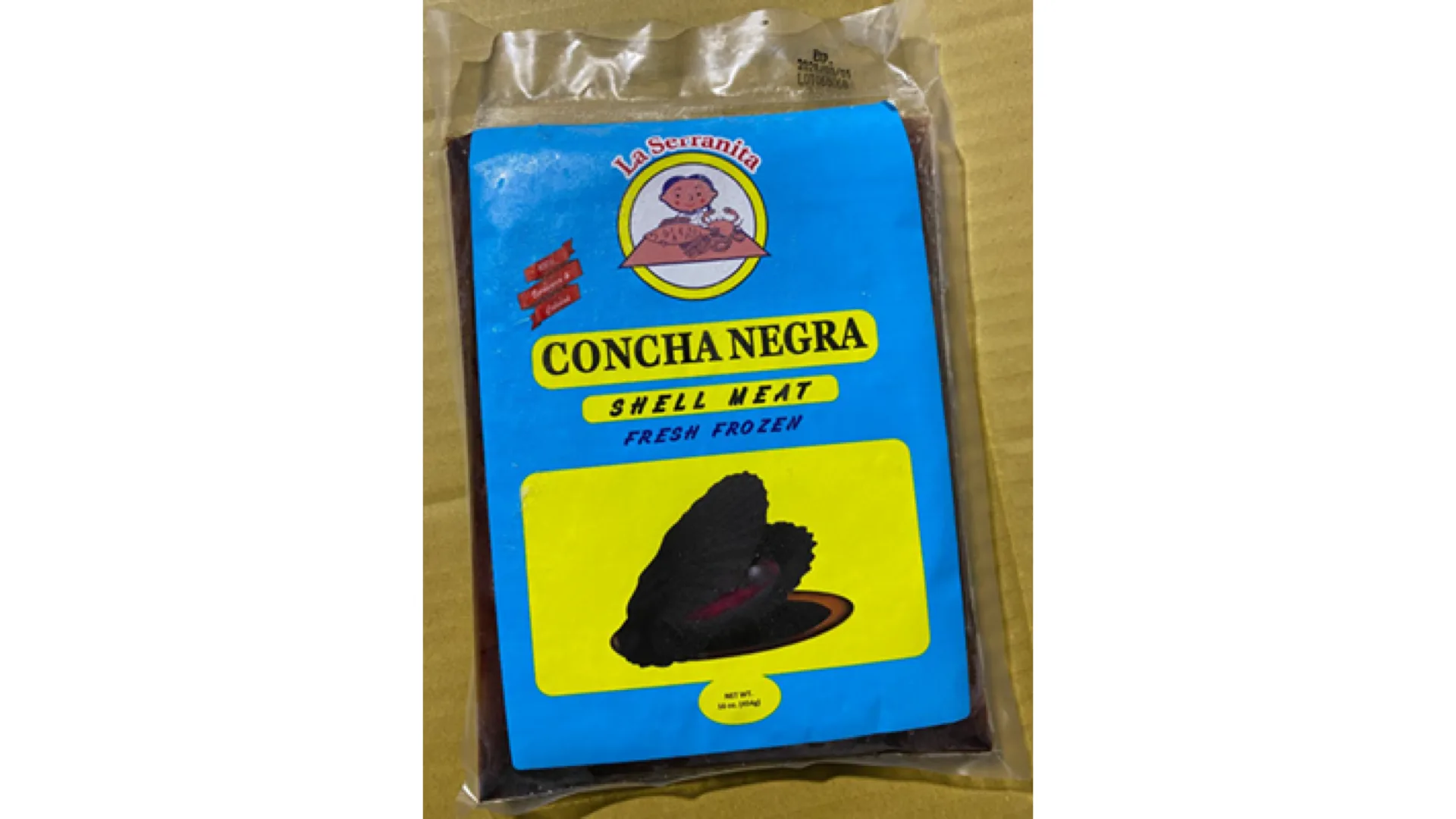
If you ate La Serranita concha negra shell meat, or ceviche made with it, and later got hepatitis A, Ron Simon & Associates can review your situation. You don’t need the package or a receipt to ask.
FDA is telling consumers, restaurants, and retailers not to eat, sell, or serve La Serranita concha negra shell meat from Ecuador, because it may be contaminated with hepatitis A virus. It’s fresh frozen shell meat sold in 16-oz plastic packages.
As of October 1, 2026, CDC reported 37 illnesses in Massachusetts, Minnesota, New York, and Pennsylvania. Of the 37 people with information available, 30 were hospitalized and no deaths were reported. Illness onset dates range from July 30, 2025, to June 23, 2026. Because hepatitis A can take 15 to 50 days to cause symptoms, cases are hard to connect without careful traceback and medical records. CDC closed its investigation on October 1, 2026, and says traceback to identify the clams’ source or sources is ongoing.
Product and Distribution
The FDA’s May 22, 2026 update reported that the La Serranita concha negra shell meat was distributed to restaurants and retailers in Connecticut, Massachusetts, New Jersey, New York, Ohio, and Pennsylvania and may have been further distributed. Connecticut’s Department of Public Health said a limited number of Connecticut retailers received the same product, and that there’s currently no confirmed link between this outbreak and Connecticut-harvested shellfish. Earlier New York and New Jersey notices traced the concha negra from a New Jersey dealer/importer to a New York dealer, and New Jersey’s health department said the clams were illegally imported from Ecuador and came from an unapproved source.
Dealers in New York and New Jersey recalled La Serranita concha negra products. FDA advises businesses and consumers to dispose of the product or contact the distributor to arrange destruction.
Why Hepatitis A in Shellfish Is Serious
Hepatitis A is a contagious virus that can damage the liver. Symptoms can include fatigue, nausea, vomiting, stomach pain, jaundice, dark urine, and pale stool. CDC says young children often have few symptoms or none at all, while adults are more likely to show them. The people counted in this outbreak range from 6 to 40 years old, and CDC reports that 30 of the 37, or 81 percent, were hospitalized.
Shellfish can carry hepatitis A when harvested or handled in unsafe conditions. Of the people CDC interviewed in this outbreak, 77 percent said they had eaten ceviche, 76 percent raw or undercooked shellfish, and 47 percent raw or undercooked conchas negras. CDC says those percentages ran significantly higher than in its FoodNet Population Survey, and that people in this outbreak may have gotten sick from eating raw or undercooked clams.
Your Legal Rights
Hepatitis A claims turn on the calendar more than most food poisoning claims do. FDA says illness usually occurs within 15 to 50 days after eating contaminated food, so the meal that made you sick was probably weeks before your first symptom. A receipt, a reservation, or the restaurant’s own purchase records are often what ties the two together. If you got hepatitis A after eating La Serranita concha negra shell meat or ceviche made with it, those records carry more weight here than they would in a case where symptoms started the next day, and they’re usually what a concha negra lawsuit is built on.
If a health department told you to get a hepatitis A shot or immune globulin because you were exposed, the cost of that care and the time you missed may still be recoverable.
Ron Simon & Associates represents people sickened in hepatitis A outbreaks nationwide. Our hepatitis A lawyers can request purchase and public-health records, work with your treating doctor on the liver-injury picture, and pursue compensation for medical bills, lost income, and pain and suffering. CDC’s closed investigation is a public-health milestone, not a legal deadline. To see how these claims work generally, start with our hepatitis A lawyer page, or our New York food poisoning lawyer page if you ate the product there.