
What We Know About the Alfalfa Sprouts E. Coli and Salmonella Outbreak
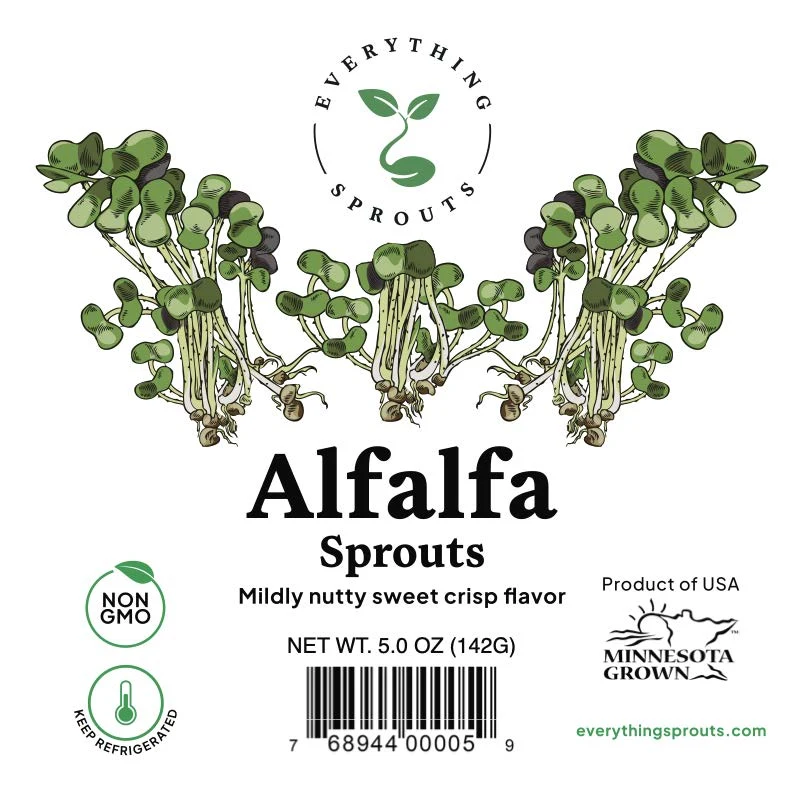
Fifty-five people across 15 states have been infected in an outbreak that CDC and FDA have tied to raw alfalfa sprouts distributed by Everything Sprouts, LLC of Minneapolis and sold under the Calco and Everything Sprouts brands. Four people have been hospitalized. No deaths have been reported. Illnesses started between May 31 and August 8, 2026, and the investigation is still open.
What makes this one unusual is that it carries two different germs. CDC has identified three strains of Shiga toxin-producing E. coli, O26:H11, O103:H25, and O168:H8, plus one strain of Salmonella Agona. Forty-six people were infected with E. coli, 7 with Salmonella, and 2 people caught both at once.
Minnesota and Wisconsin account for 38 of the 55 cases, 21 and 17 respectively. The rest are scattered across Florida, Indiana, Iowa, Kansas, Michigan, New Hampshire, New York, North Carolina, North Dakota, Pennsylvania, South Carolina, South Dakota, and Washington.
How Investigators Landed on Alfalfa Sprouts
The evidence here is unusually clean for a produce outbreak. Of the 34 sick people interviewed, 26, or 76 percent, said they had eaten alfalfa sprouts. CDC compares that against the FoodNet Population Survey, where only 8.7 percent of healthy respondents report eating any kind of sprout. A gap that wide is what investigators use to separate a real signal from coincidence.
Investigators also found at least two illness clusters in Minnesota and Wisconsin, meaning groups of people from different households who ate at the same restaurant or shopped at the same store before getting sick. The most commonly reported item in those clusters was alfalfa sprouts. Traceback from those Minnesota and Wisconsin restaurants pointed to Everything Sprouts as a source of illness in the outbreak.
Carlota Medus, who supervises the Minnesota Health Department’s foodborne diseases unit, described how her team got there. “We interviewed our cases and identified that they had eaten sandwiches containing sprouts at various restaurants, while ruling out other exposures in common,” she told the Star Tribune. A review of invoices then led to the common supplier. Medus also noted that only about 7 percent of people eat sprouts in a given week, which is what made the food stand out once sick people started listing what they’d eaten. On the two pathogens, she said, “So far we have identified cases with one type of salmonella and three different types of STEC, and some persons had co-infections.”
That detail matters if you’re wondering whether your own illness counts. Nobody in those interviews walked in saying “it was the sprouts.” They listed sandwiches.
FDA opened an inspection and began collecting samples at the Minneapolis facility on August 19, 2026. It’s careful to say the investigation is ongoing and that it’s still working out where the contamination came from and whether other products or companies are involved. FDA also says it’s still determining whether the recalled sprouts reached states beyond Minnesota and Wisconsin, which matters given that people got sick in 13 other states.
The Recall
On August 22, 2026, Everything Sprouts recalled alfalfa sprouts in 5 oz plastic containers under both brand names, lot numbers 222, 223, 225, 226, and 230. FDA lists the recall bar codes as 860014523113, 860014523120, and 850079470149. The same alfalfa sprouts also went into two mixed products, Crunchy Protein Sprout Mix cups and Zesty Garlic Mix cups, which are covered by the recall as well.
The recalled product moved between May 27 and August 21, 2026 to wholesale distributors, grocery stores, and restaurants in Minnesota and Wisconsin. Neither agency has published a store list, but when Minnesota health officials announced the outbreak, the Star Tribune reported the brands are carried at grocery chains including Cub, Kowalski’s, and Jerry’s, and that the company also supplies restaurants. If you shopped or ate out in either state this summer, that window is worth checking against your own calendar.
Why Sprouts Keep Showing Up in Outbreaks
Sprouts have a long record here, and FDA is blunt about why. Unlike other fresh produce, sprouts are grown from seeds and beans under warm, humid conditions, and FDA says those same conditions are ideal for the growth of bacteria including Salmonella, Listeria, and E. coli. Its warning goes further. If just a few harmful bacteria are present in or on the seed, they can grow to high levels during sprouting, even in a clean facility. That’s why one contaminated seed lot can produce illnesses that look scattered and unrelated, and it’s why CDC says FDA is working to determine whether there’s a common seed supplier behind this outbreak.
This is not a new problem, and FDA has counted it. Between 1996 and 2014, FDA records 43 outbreaks, 2,405 illnesses, 171 hospitalizations, and 3 deaths tied to sprouts. Its produce safety rule calls sprouts “especially vulnerable to dangerous microbes because of the warm, moist and nutrient-rich conditions needed to grow them,” and it advises that people who are more vulnerable to foodborne illness should avoid eating raw or lightly cooked sprouts of any kind. FDA also says its produce regulations reduce the risk of contamination without eliminating it. The strands on a sandwich are almost never cooked.
There’s one more wrinkle worth knowing, because it explains how contaminated sprouts can pass the tests and still reach a store. Federal rules require sprout growers to test each production batch, and the pathogens named in the rule are E. coli O157:H7 and Salmonella species. All three E. coli strains in this outbreak are non-O157. Under the rule, non-O157 strains have to be tested for only when additional conditions are met. A batch can clear the named panel and still carry the strains that made people sick here.
What FDA Found at This Facility Before the Outbreak
Everything Sprouts was already on FDA’s radar. On March 28, 2025, FDA sent the company a warning letter after an inspection that ran from October 30 to November 14, 2024. FDA concluded that the firm’s mung bean, soybean, and green sprout products were adulterated because they had been “prepared, packed, or held under insanitary conditions whereby they may have become contaminated with filth.”
What the investigator saw is specific. The roof was leaking through the ceiling tiles in the middle of the production room, about four feet from the packaging tables, and water was dripping onto totes of cooled, exposed mung bean sprouts as pallets moved through for packing. A second roof leak dripped near a rack of clean smocks waiting for employees who handle produce. FDA said it was unable to evaluate whether the company’s proposed fixes were adequate, and noted that the firm rents the building and had said the landlord would repair the roof as a long-term project with no estimated date.
The line that stands out most is about repetition. FDA wrote that during earlier inspections of the same sprouting operation in 2018 and 2023, under different ownership but in the same building, its investigators had also observed dripping condenser units.
Two honest limits on that record. The 2025 warning letter concerned mung bean, soybean, and green sprouts, not alfalfa, and neither FDA nor CDC has linked it to this outbreak. It’s facility history, not a finding about the sprouts in this recall. But a company’s inspection record is ordinarily part of what a food safety case looks at, and this one is public.
If You Got Sick
The hardest part of a sprout case is usually that people don’t remember eating sprouts. They come as a few strands on a sandwich, in a wrap, or on top of a salad, and nobody orders them. If your diarrhea is ongoing or ended recently and you never got an answer, ask your doctor whether a stool test would still be useful. Tell the doctor that you may have eaten alfalfa sprouts and that this outbreak includes both E. coli and Salmonella, because the right testing depends on your symptoms and when they began. Reporting the illness to your state or local health department gives public health investigators a chance to determine whether testing or outbreak matching is still possible.
For the E. coli side of this outbreak, watch for the warning signs of hemolytic uremic syndrome, a type of kidney failure that can follow a Shiga toxin-producing E. coli infection, especially in young children. Our HUS lawyer page explains what that diagnosis involves and why those cases are handled differently. Our E. coli lawyer and Salmonella lawyer pages go deeper on how each infection is diagnosed and proven.
Your Legal Rights
If E. coli or Salmonella from these sprouts made you or your child sick, you may be entitled to compensation for medical bills, lost income, pain and suffering, and other damages. You don’t have to have been hospitalized for a claim to be worth reviewing. An alfalfa sprouts lawsuit typically runs against the grower and distributor, and where the sprouts were served at a restaurant, it can reach that business too.
Two practical things can help a claim here. A lab-confirmed diagnosis can identify the pathogen and may allow public health laboratories to compare your sample with outbreak samples. A record of where you ate or bought the food can help document the possible exposure, and it does not have to be the package. A receipt, card statement, delivery-app order history, or restaurant name may be useful. Investigators and attorneys consider that evidence alongside CDC and FDA epidemiology and traceback findings. No single record establishes the connection by itself. Filing deadlines vary by state, so it helps to document the exposure and diagnosis promptly. If you got sick in either of the two states at the center of this outbreak, our Minnesota food poisoning lawyer and Wisconsin food poisoning lawyer pages cover the deadlines that apply there.
Ron Simon & Associates is a food poisoning law firm that has recovered over $850 million for victims nationwide. Our E. coli and Salmonella lawyers focus on foodborne illness cases and are reviewing claims from this outbreak. Contact our law firm for a free consultation at 1-888-335-4901. You pay us nothing unless we recover compensation for you.
