What We Know About the MOGO Moringa Salmonella Outbreak
CDC closed this outbreak on July 17, 2026. By then 34 people across 22 states had been infected with the outbreak strain of Salmonella Typhimurium tied to MOGO-brand Moringa Oleifera capsules, sold by MOGO Moringa LLC of Saint Louis, Missouri. Of the 25 people whose records CDC had, 11 were hospitalized. No one died.
People got sick between August 27, 2025 and June 21, 2026. Of the 17 people investigators interviewed, 14 (82%) said they’d taken moringa powder capsules, and 11 of them named MOGO. One more woman took the capsules while breastfeeding, and her infant came down with the outbreak strain. FDA’s traceback found that MOGO Moringa LLC bought all of its moringa leaf powder from India.
A Separate Outbreak, A Familiar Problem
FDA said from the start that this was a new outbreak, separate from two earlier Salmonella outbreaks tied to moringa products:
- January 2026 Live It Up Super Greens outbreak (Salmonella Typhimurium, Newport and Richmond), which reopened on May 27, 2026 and closed again on July 22, 2026 with 131 cases and 36 hospitalizations across 38 states
- February 2026 Rosabella moringa capsule outbreak (extensively drug-resistant Salmonella Newport and Kentucky), which closed with 10 cases across 8 states
Different strains, different brands, different manufacturers. The common concern is contamination in moringa ingredients. CDC says it has investigated four outbreaks linked to contaminated moringa products since 2025, and FDA traced the moringa leaf powder in three of them, including this one, back to India.
The Recalled Product
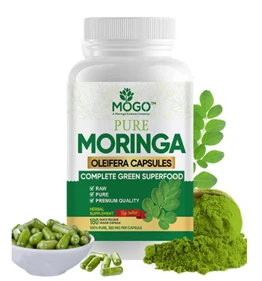
On May 25, 2026, MOGO Moringa LLC announced a voluntary recall of two lots of MOGO Pure Moringa Oleifera Capsules after discussions with the FDA. The product comes in white plastic bottles with a green label. The affected lots are:
- Lot 15525AA with expiration date 06/2027
- Lot 00926AA with expiration date 01/2028
The lot number is printed on the bottle. When MOGO announced the recall it said independent third-party testing of its retained samples hadn’t detected Salmonella, and it called the recall a precaution. Samples FDA took during one of its inspections also tested negative. Opened bottles from sick people’s homes showed something different. According to CDC, officials in Florida, Tennessee and Washington collected opened containers of MOGO capsules from sick people’s homes, and whole genome sequencing showed the Salmonella in those samples was closely related to bacteria from the people who got sick. FDA reports that Florida’s sample carried one other strain of Salmonella as well. No other MOGO products are part of the recall.
MOGO’s recall notice says it sells online through authorized channels and doesn’t authorize outside sellers. FDA’s outbreak page says the recalled bottles were sold on Amazon, eBay and mogomoringa.com, and the recall report filed with FDA adds Etsy. Recalled lots bought on any of those sites are part of the recall.
FDA classified the recall as Class I on June 29, 2026, its most serious category, and the enforcement record covers 23,186 bottles. That classification is FDA’s read on the hazard, not a finding against the company. The record still listed the recall as ongoing on August 26, 2026, so it hasn’t been closed out yet.
Why Moringa Supplements Keep Showing Up in Outbreaks
Moringa leaf powder can pass through several processors and packers before it reaches a finished capsule. FDA’s traceback in the separate Live It Up outbreak found a common manufacturer for Live It Up Super Greens and Why Not Natural moringa capsules, showing why records from each step of the supply chain matter.
In its closing summary, FDA said it confirmed moringa leaf powder as the source of this outbreak. Its inspectors issued Form 483 observations to two firms in MOGO’s supply chain. At the first, they covered product specifications, contamination limits and not following procedures. At the other, inspected by FDA’s India office, they covered missing written records and procedures, cleaning and sanitation, hazard controls, worker practices and facility upkeep. FDA has since increased screening of moringa powder imported from India. FDA says its outbreak investigation is complete.
The True Scope Was Likely Larger
CDC says the real number of people this outbreak made sick was likely much higher than the 34 confirmed cases, and that the outbreak may not have been limited to the 22 states on its map. Most people with Salmonella get better at home and never get a stool test, so they never show up in the count. Moringa capsules also have a long shelf life, which is why CDC still wants anyone holding a recalled bottle to throw it out.
Your Legal Rights
CDC closing the investigation ended the public-health work. Closure does not by itself decide whether a person has a claim or which filing deadline applies. The lab results and inspection findings from the investigation may help an attorney assess the evidence.
If you took MOGO Pure Moringa Oleifera Capsules from Lot 15525AA or Lot 00926AA and developed a Salmonella infection, you may have a claim seeking medical expenses, lost wages, pain and suffering, and other damages allowed by law. Our Salmonella lawyer page explains how these claims work.
Ron Simon & Associates is a food poisoning law firm that has recovered over $850 million for victims nationwide. Our attorneys focus exclusively on foodborne illness litigation and have already represented victims in the Live It Up Super Greens moringa outbreak earlier this year. You pay us nothing unless we win your case. Results vary by case. Call 1-888-335-4901 for a free, confidential case review.