
The headlines have a nickname for the illness spreading across the country this summer. They call it the "explosive diarrhea bug." The explosive part is fair. The word bug is not. What's making people sick isn't a virus you catch from a coworker or a stomach flu going around the office. It's a parasite called Cyclospora, and you get it by swallowing it, almost always on fresh produce, not by standing next to someone who has it.
That difference isn't a technicality. Federal and state health officials are now tracking Cyclospora across at least 17 states, and the count keeps climbing. In Michigan alone it jumped from a normal year's worth of cases to nearly a thousand in a matter of weeks. No one has named the food behind it yet. We represent people and families sickened in produce outbreaks, and the questions we hear most are the ones these headlines skip right past. Start with the word everyone is getting wrong.
What is Cyclospora, and why isn't it a "stomach bug"?
Cyclospora is a parasite, not a "bug" in the way most people mean that word. Its full name is Cyclospora cayetanensis, and it's a single-celled organism so small you need a microscope to see it, according to the CDC. A parasite is a living thing that survives by living on or inside another living thing. That's a different kind of germ from the viruses and bacteria people picture when they hear "stomach bug." Doctors group it with the coccidian parasites, the same broad family as crypto, the parasite many people know from swimming-pool warnings.
Why does the label matter? Because three things people assume about a stomach bug are wrong for this one. You probably can't catch it from a sick family member. Washing your salad won't reliably remove it. And it often won't just pass on its own the way a weekend stomach flu does. Each of those deserves its own answer.
Is Cyclospora contagious? Can you catch it from a sick person?
No, not directly. Cyclospora is very unlikely to spread from person to person, according to the CDC. The reason is the key to understanding the whole illness. When the parasite passes out of an infected person, it isn't infectious yet. It has to spend at least one to two weeks maturing in the environment, a process called sporulation, before it can make anyone else sick. The MSD Manual puts it flatly for clinicians: the oocysts are not infective when passed in stool, so direct fecal-oral transmission does not occur.
That's the opposite of norovirus, the illness most people actually mean when they say "stomach bug" or "stomach flu." The Cleveland Clinic calls norovirus "a common and very contagious virus" that spreads easily through close contact or contaminated food and surfaces. That's the classic bug that tears through a household, a daycare, or a cruise ship. Cyclospora doesn't move that way at all.
This matters more than it first sounds. If your whole household got sick within a few days of each other, the instinct is to assume you passed something around. With Cyclospora, you almost certainly didn't. You shared a contaminated food. That single fact is what turns a mystery illness into a question that has an answer, which is what did we all eat, and where did it come from.
What are the symptoms, and why do they call it "explosive diarrhea"?
The most common symptom is exactly what the headlines describe. Cyclospora infects the small intestine and usually causes frequent, watery, and sometimes explosive diarrhea. That's the CDC's own wording, so the vivid part of the nickname is accurate. Along with it, people often get:
- Loss of appetite and weight loss over days or weeks
- Stomach cramps and bloating, and more gas than usual
- Nausea, though vomiting is less common
- A deep tiredness that lingers
- A low-grade fever or a flu-like, achy feeling in some people
Some people who are infected have no symptoms at all. What throws most people off is the timeline. This is not a rough 24 hours. Symptoms usually start about a week after exposure, and without treatment the illness can last anywhere from a few days to a month or more, often seeming to fade and then flaring back up. The CDC calls that a remitting-relapsing course. It's part of why people wait too long before they get checked.
How do you get Cyclospora, and can you wash it off?
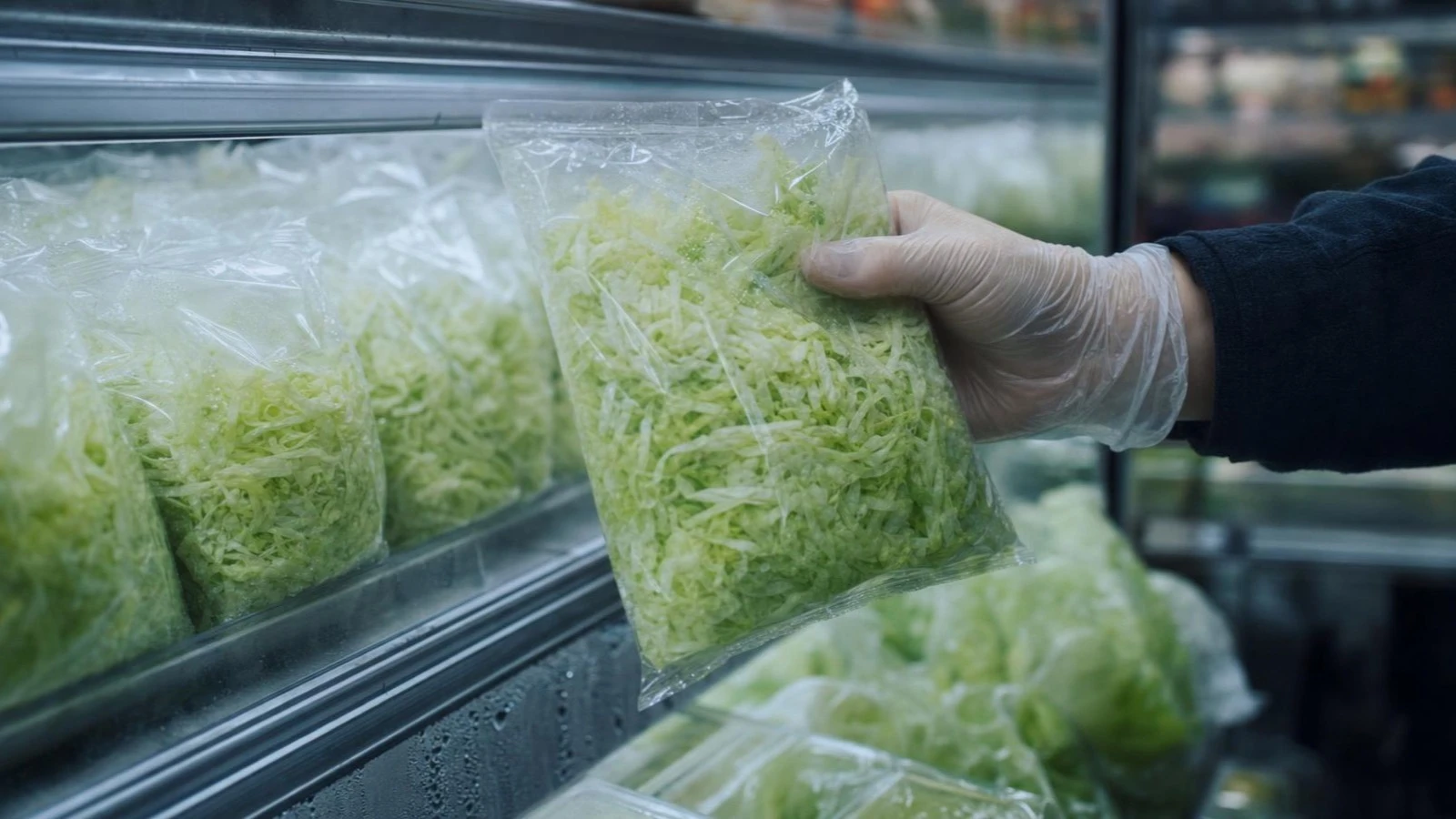
You get Cyclospora by eating food or drinking water contaminated with the parasite, the CDC says. In the United States, that has meant fresh produce over and over again. The FDA lists raspberries, basil, cilantro, snow peas, and mesclun lettuce among the foods tied to past U.S. outbreaks. In 2025, fresh parsley served at restaurants drove a separate one. None of those is the confirmed source of the 2026 illnesses, which is still unknown. They're the pattern from years past, not a finding in this outbreak.
Here's the part that surprises people, and it matters if you have been blaming yourself. Rinsing and washing produce is a good habit, but it is not a reliable defense against this parasite. The FDA says plainly that "rinsing or washing food is not likely to remove it," and that Cyclospora may resist even chlorine-based sanitizing. Its tough outer wall lets it cling to produce, settling into the nooks of a berry or the folds of a leaf. So if you got sick from a salad or a bowl of berries, you did not fail to wash them well enough. The problem started long before that food reached your kitchen, somewhere in how it was grown, handled, or watered.
How long does it last, and will it go away on its own?
It can go away on its own, but counting on that is a gamble. The CDC says most people with healthy immune systems eventually recover without treatment. It also says that untreated, the illness can drag on "from a few days to over a month" and relapse more than once. People who are in poor health or who have a weakened immune system may be at higher risk for a severe or long illness, the CDC adds, which is one reason cyclosporiasis is worth taking seriously rather than waiting out. It is one of the food poisoning complications that can keep coming back.
The practical takeaway is simple. If you have had watery diarrhea for more than a few days, this is not the illness to ride out at home. The FDA tells people to call a provider for any diarrhea lasting more than three days, and with Cyclospora there is a specific reason to go in.
How is Cyclospora treated, and why do regular tests miss it?
Cyclospora is treated with a specific antibiotic, trimethoprim-sulfamethoxazole, sold as Bactrim, Septra, or Cotrim, according to the CDC. A typical course for an adult is one double-strength tablet twice a day for 7 to 10 days. Rest and fluids help, but for this parasite they usually won't clear it quickly or reliably on their own, which is why the antibiotic is the treatment of choice. That's another way it differs from a viral stomach bug, which has no cure and simply runs its course. People who are allergic to sulfa drugs should ask their provider about other options.
The harder part is getting diagnosed at all. Cyclospora doesn't show up on a routine stool test. The CDC is explicit that finding it requires special laboratory tests that are not part of routine stool testing, and that not every gastrointestinal PCR panel even looks for it. So a doctor has to order the Cyclospora test by name. On top of that, the parasite is shed in small, on-and-off amounts, so a single negative sample doesn't rule it out, and you may need to give samples on more than one day. If you think this might be what you have, say the word Cyclospora out loud at the visit so it's on the table.
What's happening in the 2026 Cyclospora outbreak?
As of its early-July update, the CDC had counted 145 people sickened by Cyclospora acquired inside the United States between May 1 and June 16, 2026, across 17 states, with 20 hospitalized and no deaths. The agency is careful with the wording, and so are we. It says there is "currently no evidence of a single, multistate Cyclospora outbreak linking all cases." This is a national surveillance count, and investigators are working several separate clusters that may not share one source.
The number that grabbed headlines came after that count closed. Michigan, which normally sees around 50 Cyclospora cases in an entire year, reported more than 170 in nine days, the state's health department said on July 1. By July 8, Michigan officials put the state's total at 992 cases since June 22, with 36 hospitalizations, Detroit's WDIV reported. Because those cases landed after the CDC's June 16 cutoff, the true national picture is larger than the 145 figure suggests.
No food, brand, or restaurant has been named as the cause, and there is no recall. For the running case counts, the states involved, and updates as they come, see our 2026 Cyclospora outbreak page. If you were sickened in the hardest-hit state, here is how food poisoning claims in Michigan work.
Why is the source so hard to find?
Cyclospora is genuinely hard to trace, for reasons built into the parasite itself.
- The lag. Symptoms start about a week after the contaminated food is eaten, and the relapsing course stretches things out further. By the time a test comes back positive, the produce is eaten and gone, and receipts and memories have faded.
- No chain of people to follow. With a contagious illness, investigators can trace who infected whom. Cyclospora leaves no such trail, because it doesn't spread that way. Every case points back to a food or water source instead.
- A long, often imported supply chain. Fresh produce can pass through growers, packers, importers, and distributors, sometimes in more than one country, before it reaches a plate.
- The lab tools are still catching up. For bacteria like E. coli, labs can fingerprint a strain and match one patient to a specific food lot. The CDC says it is still working to develop and validate that kind of molecular matching for Cyclospora, so investigators lean on interviews and patterns.
- Undercounting. Because routine tests miss it and some people recover without ever seeing a doctor, the CDC says the real number of people sick is very likely higher than what's reported.
All of that adds up to a point worth sitting with. When a produce outbreak like this one is finally solved, the answer is almost never the person who ate the food. It's a breakdown somewhere upstream, at a farm, a packing house, or an importer, in a part of the supply chain a shopper cannot see or control. That upstream stretch is almost always where an outbreak like this begins, and where the responsibility for it sits.
What to do if you think you have Cyclospora
If you have had days of watery diarrhea and you are reading this wondering whether it's you, a few steps protect both your health and your options.
- See a doctor and ask specifically for a Cyclospora test. Routine stool panels miss it, so name it, and be ready to give more than one sample on different days.
- Report your illness to your local or state health department. This is how investigators connect scattered cases and trace the food behind them, which helps protect other people too.
- Save what shows what you ate and where. Receipts, grocery loyalty or delivery records, a photo of the produce or the meal, and the packaging if you still have it. Memories of which day and which dish fade within a week.
- Write down a simple timeline while it's fresh. What you ate in the two weeks before symptoms started, when they started, and what each provider told you.
- Keep your medical records and a running list of out-of-pocket costs and missed workdays.
Those records matter for a reason beyond your own care. Because the source of this outbreak has not been named, your own documentation may be the strongest evidence there is if it turns out that contaminated food made you sick. If you are weighing whether you have a claim, our Cyclospora lawyer page explains how these cases work, and our food poisoning lawyer guide covers the basics. The consultation is free, so it costs you nothing to learn where you stand.
Frequently asked questions
Is Cyclospora contagious?
No. Cyclospora is very unlikely to spread from person to person, because the parasite has to mature in the environment for one to two weeks before it can infect anyone, according to the CDC. People get it from contaminated food or water, not from each other.
What parasite causes explosive diarrhea?
Cyclospora cayetanensis, a single-celled parasite spread through contaminated food or water, is the one behind the 2026 U.S. outbreak. The CDC describes its main symptom as frequent, watery, and sometimes explosive diarrhea. It is not the same as giardia or a viral stomach bug, and it needs a specific test to find.
Will Cyclospora go away on its own?
Sometimes, but not reliably. The CDC says many healthy people recover without treatment, yet untreated the illness can last a month or more and relapse. The recommended treatment is the antibiotic trimethoprim-sulfamethoxazole (Bactrim), so it's worth seeing a doctor rather than waiting it out.
Can you wash Cyclospora off fruits and vegetables?
Not reliably. The FDA says rinsing or washing food "is not likely to remove it," and the parasite may resist chlorine-based sanitizing. Washing produce is still worth doing, but it is not a dependable defense against this parasite, which is why contaminated produce leads to recalls rather than a "just rinse it" fix.
How is Cyclospora diagnosed?
With a specific stool test that a doctor has to request by name. It isn't part of routine stool testing, and because the parasite is shed on and off, you may need to give samples on more than one day, according to the CDC.
When should you see a doctor about diarrhea?
The FDA says to contact a provider for any diarrhea that lasts more than three days. With Cyclospora there's an added reason to go in, because it needs a specific test to find and a specific antibiotic to clear, and it can drag on or relapse if it's left untreated.
Can you sue if you got sick from Cyclospora?
You may have a claim if a lab confirmed the infection and it can be linked to food you ate. Because the 2026 source has not been named, keeping your own records matters. Ron Simon & Associates reviews Cyclospora and food poisoning claims at no cost, and you pay nothing unless the firm recovers money for you.
Sources
- CDC: About Cyclosporiasis
- CDC: Surveillance of Cyclosporiasis
- CDC: Clinical Overview of Cyclosporiasis
- FDA: Cyclospora
- Michigan Department of Health and Human Services: Outbreak of Cyclosporiasis Occurring in Michigan
- WDIV / ClickOnDetroit: Michigan Cyclosporiasis Outbreak Cases Rise to Nearly 1,000
- Cleveland Clinic: Cyclosporiasis
- Cleveland Clinic: Norovirus
- MSD Manual Professional Edition: Cyclosporiasis
- Almeria S, Cinar HN, Dubey JP: Cyclospora cayetanensis and Cyclosporiasis, An Update (Microorganisms, 2019)
- University of Florida IFAS Extension: Preventing Foodborne Illness, Cyclosporiasis
This article is general information, not legal or medical advice. If you have severe or lasting diarrhea, signs of dehydration, or you're worried about someone who is very young, older, or living with a weakened immune system, call your healthcare provider. For official updates on the outbreak, follow the CDC, the FDA, and your state health department.